
The Treasury sell-off is showing no signs of easing.
The 10-year U.S. Treasury yield jumped nearly 8 basis points to 5.24% on Monday, briefly touching 5.27% — its highest level since June 2007. The 2-year yield also climbed to 4.96%, a 28-month high.
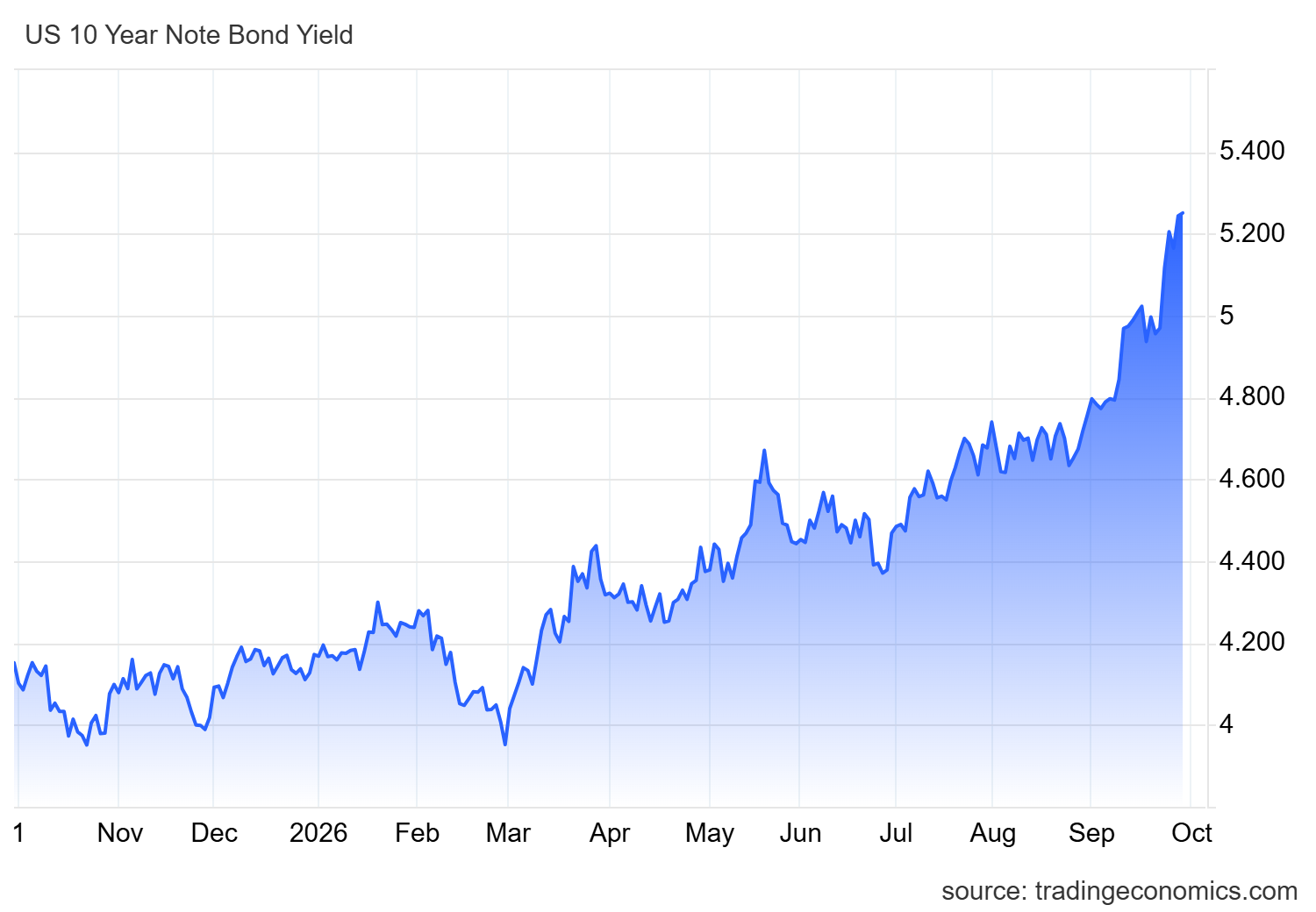
The move is pushing U.S. borrowing costs higher across the curve and putting renewed pressure on risk assets.
Is 5.35% Next?
The latest sell-off comes as investors demand higher yields amid persistent inflation concerns, rising fiscal worries and uncertainty over the Fed's path.
And the move may not be over yet.
BMO Capital Markets' rate strategist Ian Lyngen sees the 10-year yield potentially rising above 5.35% before buyers return in force.
That would put Treasury yields at levels not seen in decades — and could create another test for U.S. stocks.
The S&P 500 fell 0.8% on Monday, while the Nasdaq dropped 0.9% as higher yields weighed on equity valuations.
For investors, the key question is no longer whether Treasury yields are high. It is how much higher they can go before the pressure on stocks becomes harder to ignore.