The euro is losing ground again.
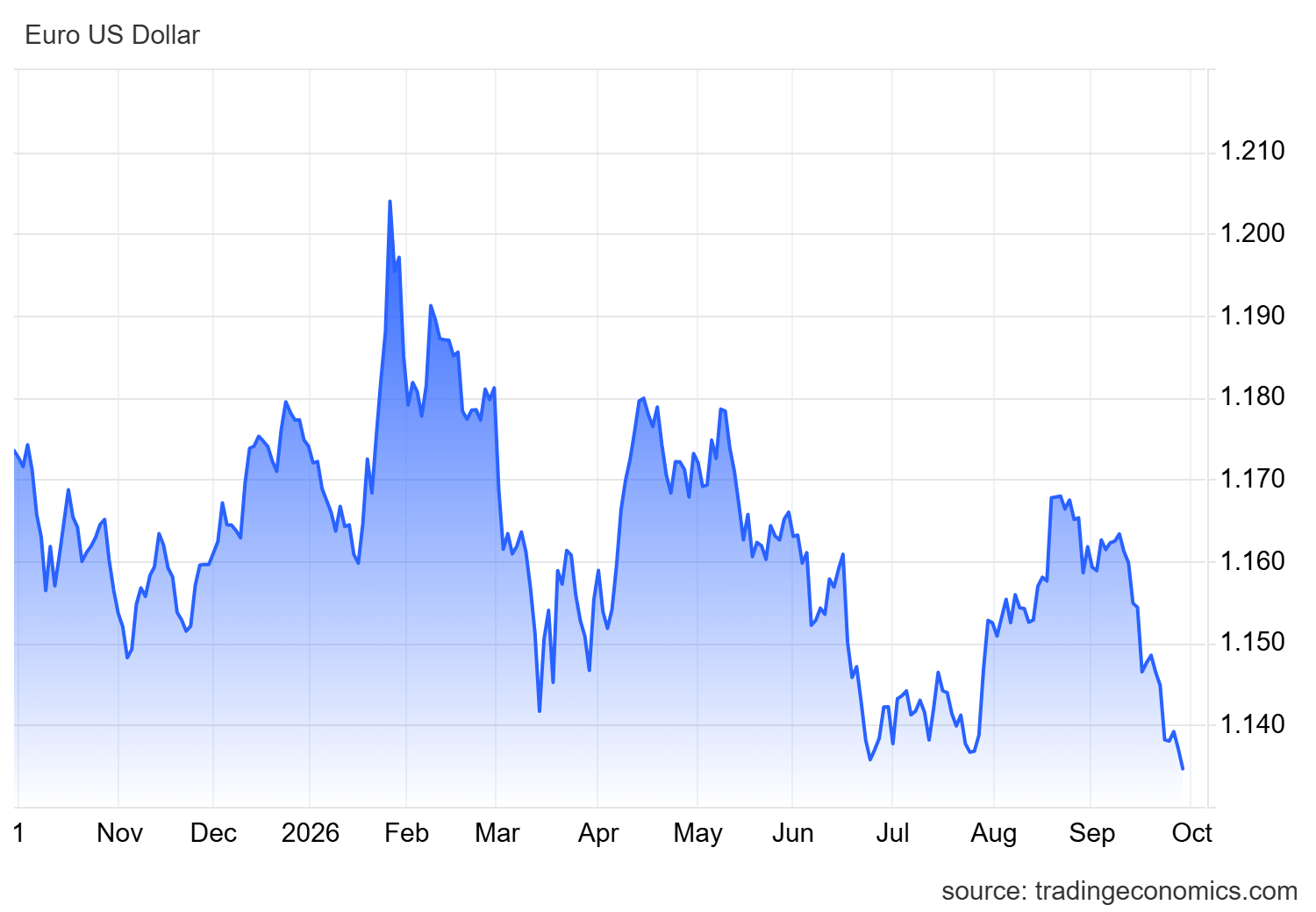
EURUSD has fallen around 2% this month, recently slipping below 1.14 and moving close to its yearly low. The bigger story, however, is not just the latest decline — it is the reversal of the forces that drove the euro's rally last year.
Back then, a resilient European economy and expectations for tighter ECB policy supported the euro. Now, rising energy prices and growing political risks are putting those arguments under pressure.
Energy Is Becoming the Problem
The renewed surge in oil and gas prices is particularly uncomfortable for Europe.
Higher energy costs can push inflation higher while squeezing economic growth at the same time. European gas prices have already climbed sharply, while RBC BlueBay's Kaspar Hense sees EURUSD potentially falling toward 1.12 if high energy prices persist.
Political risk is adding another layer of pressure. Concerns over fiscal policy in France and political uncertainty in Germany are widening the gap between European bond markets — another factor weighing on the euro.
What Could Move EURUSD Next?
For now, 1.14 is the level to watch. If EURUSD fails to reclaim it, the recent bearish momentum could remain intact, with 1.12 emerging as the next downside reference.
But a sustained decline in energy prices or easing political tensions could quickly change the picture.
The next move in EURUSD may come down to whether Europe's energy shock fades — or becomes a bigger drag on growth and the euro.