


Forex trading is not universally prohibited in Malaysia. Specifically, Malaysian residents can legally trade forex through Labuan FSA-regulated brokers or authorized overseas platforms. So long as Bank Negara framework rules are followed, trading is allowed—though unlicensed local brokers and unauthorized schemes are strictly illegal.
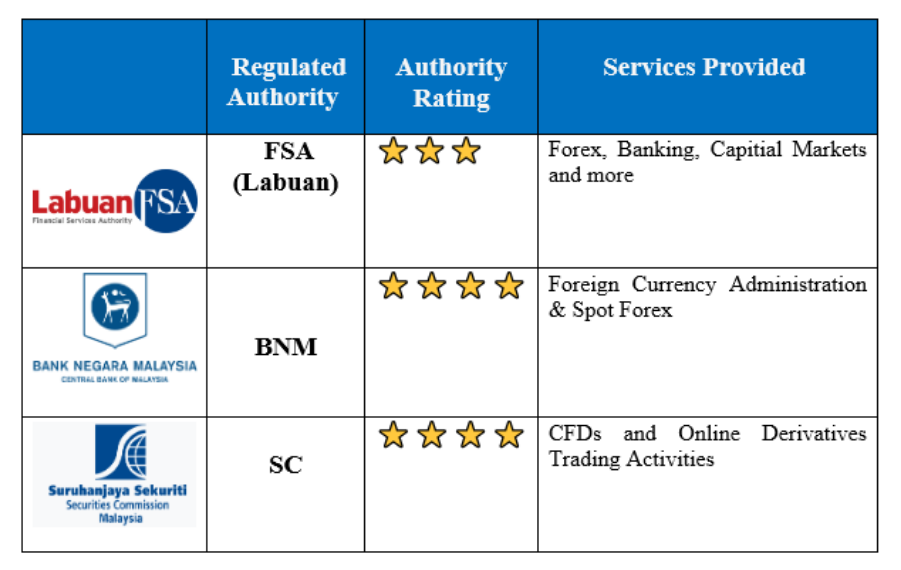
When it comes to regulation for forex and CFD trading, we need to talk about three important regulators in Malaysia:
Labuan Financial Services Authority (Labuan FSA): The statutory regulator for the Labuan International Business and Financial Centre (Labuan IBFC). It regulates offshore banking, insurance, trust companies, capital markets, and money broking entities operating out of the federal territory of Labuan under specialized federal legislation.
Beyond general oversight, the heavyweight direct regulation of forex and CFD trading is divided between two key statutory authorities: Bank Negara Malaysia (BNM) and the Securities Commission Malaysia (SC).
Bank Negara Malaysia (BNM): Foreign Currency Administration & Spot Forex. BNM exercises supreme authority over foreign exchange controls, Ringgit conversion rules, and cross-border currency transfers under the Financial Services Act 2013 (FSA). BNM governs physical foreign exchange and monitors currency outflows—such as Malaysian traders remitting funds to offshore brokers. Unlicensed spot forex schemes operated locally fall directly under BNM enforcement.
Securities Commission Malaysia (SC): CFDs and Online Derivatives Trading
The SC directly regulates and licenses all Entities offering Contracts for Difference (CFDs) and other over-the-counter (OTC) derivatives under the Capital Markets and Services Act 2007 (CMSA). Any platform offering online CFD trading onshore must hold a Capital Markets Services License (CMSL) issued by the SC. The SC sets margin limits, enforces segregation of client funds, and maintains the official Investor Alert List for unauthorized investment schemes.
Here is an overview of these three regulatory authorities:
Can Malaysians Legally Trade Forex with Offshore Brokers?
The answer is yes. However, an overseas regulatory license does not automatically authorize a forex broker to offer services in Malaysia. For Malaysian traders—no less than their global peers—the core prerequisite is operating through a strictly licensed broker.
Imagine an unlicensed broker registered in Seychelles but advertising an Australian ASIC licence held by another company within its group.
An innocent trader in Malaysia considers the account benefits from Australian regulatory oversight. Yet the agreement could identify the Seychelles company as the actual counterparty.
The difference matters. Regulatory protections and obligations depend on the contracting entity and applicable laws, not merely the broker's brand.
Malaysia's foreign-exchange rules also impose restrictions on certain transactions involving non-residents, including exchange-rate derivatives unless permitted or approved under the relevant rules.
Therefore, traders in Malaysia are advised to open their eyes to look for these operating under stringent regulation to give themselves more confidence in trading.
How Can Malaysian Beginners Check a Forex Broker's Regulatory Status?
Before depositing money, the most important thing is to verify the legal company behind the trading account rather than relying on regulatory logos displayed on a website.
A practical verification process includes:
Identify the registered entity. Check the full company name in the account agreement and terms of service.
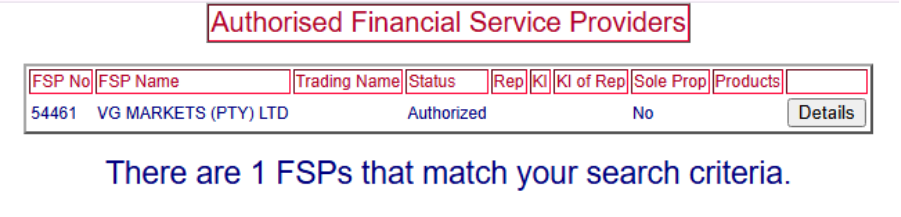
Verify the licence. Search for the relevant regulator's official register and confirm that the licence covers the entity and financial services offered.
Check Malaysian regulatory records. Use the SC's public registers and Investor Alert List.
Review deposit and withdrawal arrangements. Be cautious if the broker directs payments to unrelated individuals or companies.
Confirm whether the particular forex product and cross-border arrangement are permitted. A foreign licence alone is insufficient evidence.
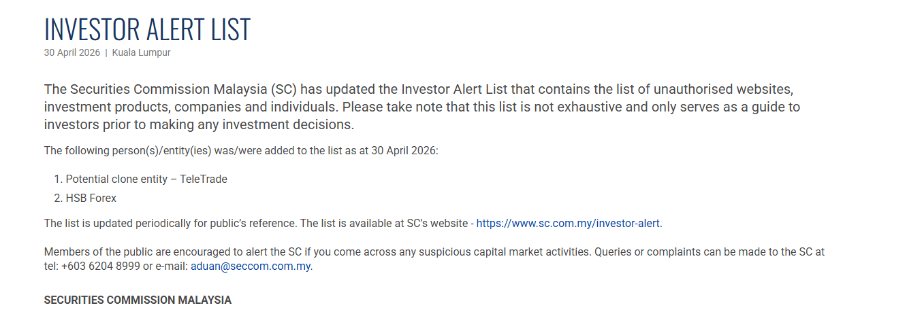
The SC maintains an Investor Alert List identifying unauthorized entities and potential impersonators. The regulator explicitly warns that investors dealing with unauthorized entities will not receive protection under Malaysian securities laws.
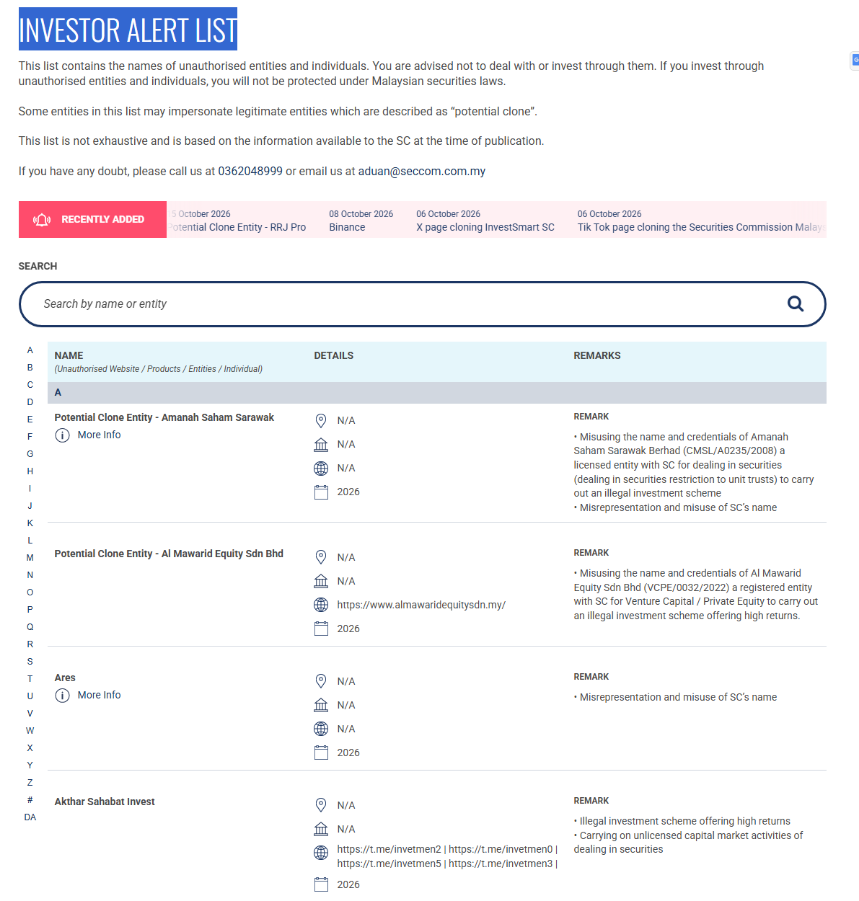
For a concrete example, the SC added an entity identified as HSB Forex to its Investor Alert List on April 30th 2026. Its appearance demonstrates why traders should check official records rather than rely on a broker's marketing claims.
Does a Foreign Forex Licence Make Trading Legal in Malaysia?
Not necessarily. A licence from ASIC in Australia, the FCA in Britain or CySEC in Cyprus establishes a regulatory status in the relevant jurisdiction. It does not, by itself, establish permission to solicit Malaysian residents or provide a particular financial product in Malaysia.
A broker may operate through several companies, each subject to different rules. Traders must establish which company holds their account and whether the service complies with applicable Malaysian requirements.
How to Spot a Scammer in Malaysia?
First, before making a deposit, traders must verify a broker’s regulatory credentials. Confirming legal status is the foundational line of defense in safeguarding client funds. A common tactic among illeagal operators is advertising fake or misleading regulatory licenses; upon closer inspection of official registry databases, no such authorization exists. Spotting these phantom licenses is a vital skill for navigating the forex market safely.
Second, Unlicensed forex brokers frequently entice beginner traders by offering guaranteed, high returns on small investments. This is a red flag for trading scams. Because forex and CFD trading carry substantial risk and market exposure, no credible broker can ever guarantee risk-free profits or consistent high returns.
A third warning sign lies in the quality—or lack thereof—of a broker’s website. Rather than disclosing exact spreads or order execution metrics, they rely on hyped marketing claims to mislead investors. Crucially, these platforms often omit legitimate contact details or company addresses, ensuring traders have no recourse or point of contact once the site vanishes.
What Is the Minimum Deposit to Start Trading in Malaysia?
Starting small is a sensible first step for beginner traders in Malaysia, where managing exposure to online trading risk is important. Crucially, a trader's initial capital is often determined by their choice of platform. Recognizing this, an increasing number of brokers operating in the Malaysian market have lowered their entry barriers—expanding options for retail investors. VG Markets, for instance, a broker regulated by both ASIC and the FSCA, allows traders to open an account with a minimum deposit as low as $20.
Best Forex Brokers Requiring Low Minimum Deposit in Malaysia
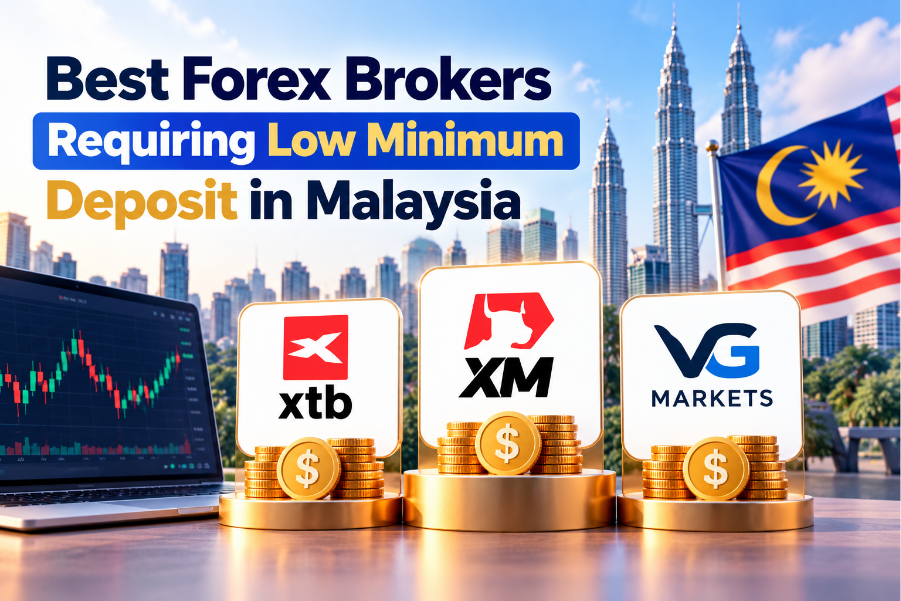
Considering the prudent nature of Malaysian traders, we have selected three excellent forex broker options. These brokers are all strictly regulated, offer flexible trading with low minimum deposits, and maintain solid reputations for smooth, reliable withdrawals.
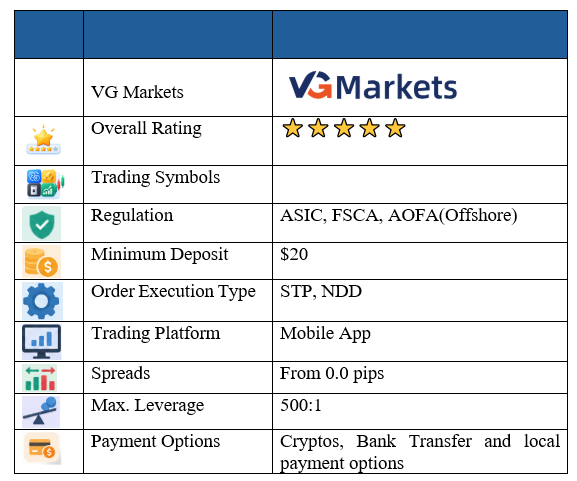
VG Markets Basic Information
VG Markets is a newly established CFD broker, yet it has quickly built a strong following among active traders. AG Markets focuses on safety and is regulated by ASIC in Australia and the FSCA in South Africa. Backed by its ASIC license, client funds are strictly segregated from company capital and held at the National Australia Bank. When it comes to trading costs, traders can enjoy competitive and transparent spreads, as orders are directly routed to liquidity providers on this platform.
Where VG Markets Shines:
✔ A licensed CFD broker with two registered entities under ASIC and FSCA, respectively
✔ Low trading barrier starting from $20, a perfect option for beginners in Malaysia
✔ As tested, withdrawal time takes up to 3 days; 90% of clients withdraw successfully
✔ Providing access to a mobile app, making trading smooth and flexible, accoupling by 7/24 customer service
✔ For crypto trading, partnered with Fireblocks to provide an extra layer of digital asset security
✔ Providing third-party Trading Central to support its educational content
Where VG Markets Falls Short:
❌ No MetaTrader 4 or MetaTrader 5 trading platform supported; Malaysian traders have fewer choices
❌ Only 5/24 customer support is provided on its website side
❌Limited access to market assets
XM Basic Information
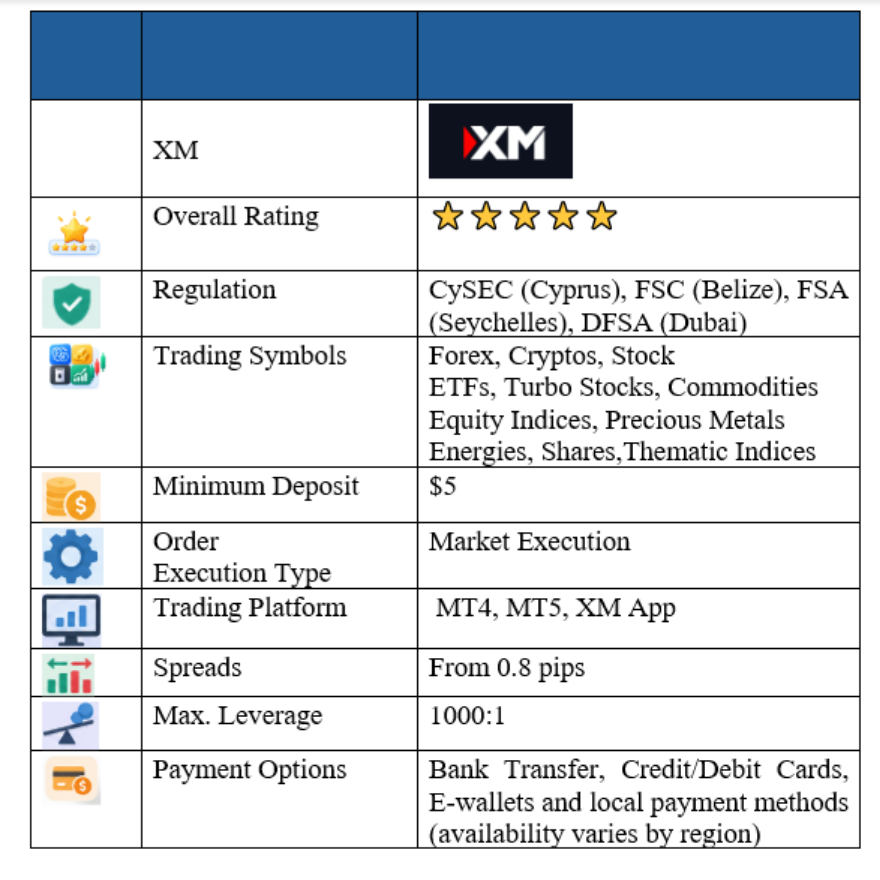
XM is a multi-regulated forex and CFD broker established in 2009. It provides trading across forex, commodities, indices, metals, energies, and stock CFDs via MT4, MT5, and the XM App. With an accessible minimum deposit of $5 and leverage up to 1:1000 for eligible accounts, XM serves a global audience through entities regulated by CySEC, FSC, and DFSA. Specific trading conditions and regulatory coverage vary by region.
Where XM Shines:
✔ Providing trading services globally under its multiple regulated entities
✔ Introducing the opportunity to trade on huge markets starting as low as $5
✔ Enabling traders to trade on the MetaTrader trading system as well as its own mobile APP
✔ Offers flexible leverage up to 1000:1 under its global trading account
✔ Supports many local payment options, with 90% of clients' withdrawals processed smoothly
Where XM Falls Short:
❌A CFD-focused broker, with its currency pair offerings limited to 52
❌Relatively high minimum deposit requirement to start share trading
❌Average spread conditions provided in its standard account
XTB Basic Information
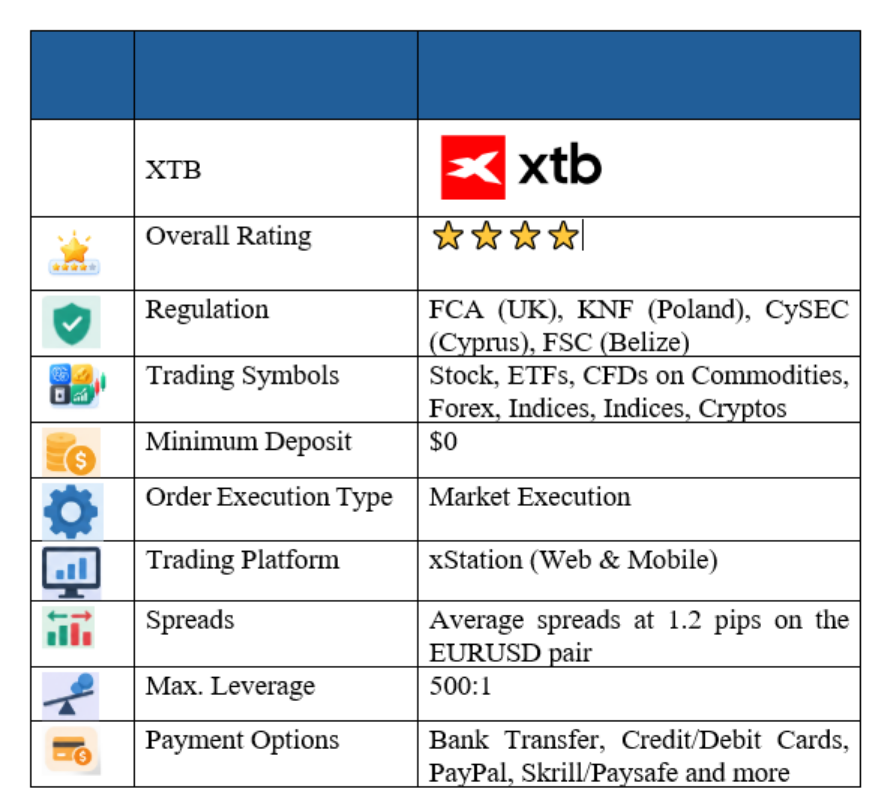
XTB is a Poland-based CFD broker established in 2004 and listed on the Warsaw Stock Exchange since 2016. XTB Is a solid forex and CFD broker, providing access to 10,521 markets, forex and CFD trading across multiple asset classes, including indices, commodities, stocks, and ETFs. It also offers direct investment in shares and ETFs through its proprietary trading platform, xStation. XTB operates through multiple legal entities regulated by financial authorities, including the UK's Financial Conduct Authority (FCA), Poland's Financial Supervision Authority (KNF), and the Cyprus Securities and Exchange Commission (CySEC).
Where XTB Shines:
✔Giving Malaysian traders the opportunity to trade 10521 symbols from $0
✔No account opening and maintenance fees, no deposit and withdrawal fees, zero commission on stock and ETF trading
✔Multiple regulated entities provide services to target different regions
✔Flexible leverage up to 500:1
✔Advanced xStation is available on both web and mobile, with 92 built-in indicators
Where XTB Falls Short:
❌Withdrawal limit: amounts above $50 can be processed
❌No MetaTrader trading system; no copy trading supported
The Bottom Line
Overall, forex trading in Malaysia is neither entirely prohibited nor freely permitted in every form. The crucial distinction lies between authorized currency transactions and speculative trading arrangements that may fall outside Malaysia's regulatory framework. For Malaysian traders, especially beginners, choosing EUR/USD over USD/JPY is a relatively minor decision compared with establishing whether the broker and trading arrangement are lawful.
FAQs
Is online forex trading legal in Malaysia?
Some online foreign-exchange transactions are permitted, particularly those conducted through licensed institutions under BNM's rules. However, leveraged forex trading through online brokers requires separate consideration of the product, provider, and applicable Malaysian laws.
Is MetaTrader 4 or MetaTrader 5 legal in Malaysia?
MT4 and MT5 are trading software platforms, not regulatory licences. Their use does not determine whether a broker or trading arrangement is lawful. The legal status depends on the financial services and entities involved.
Can Malaysians use brokers regulated by ASIC or the FCA?
A Malaysian resident may be able to access such brokers, but an ASIC or FCA licence alone does not establish that the broker is authorised to offer the relevant service in Malaysia.


