


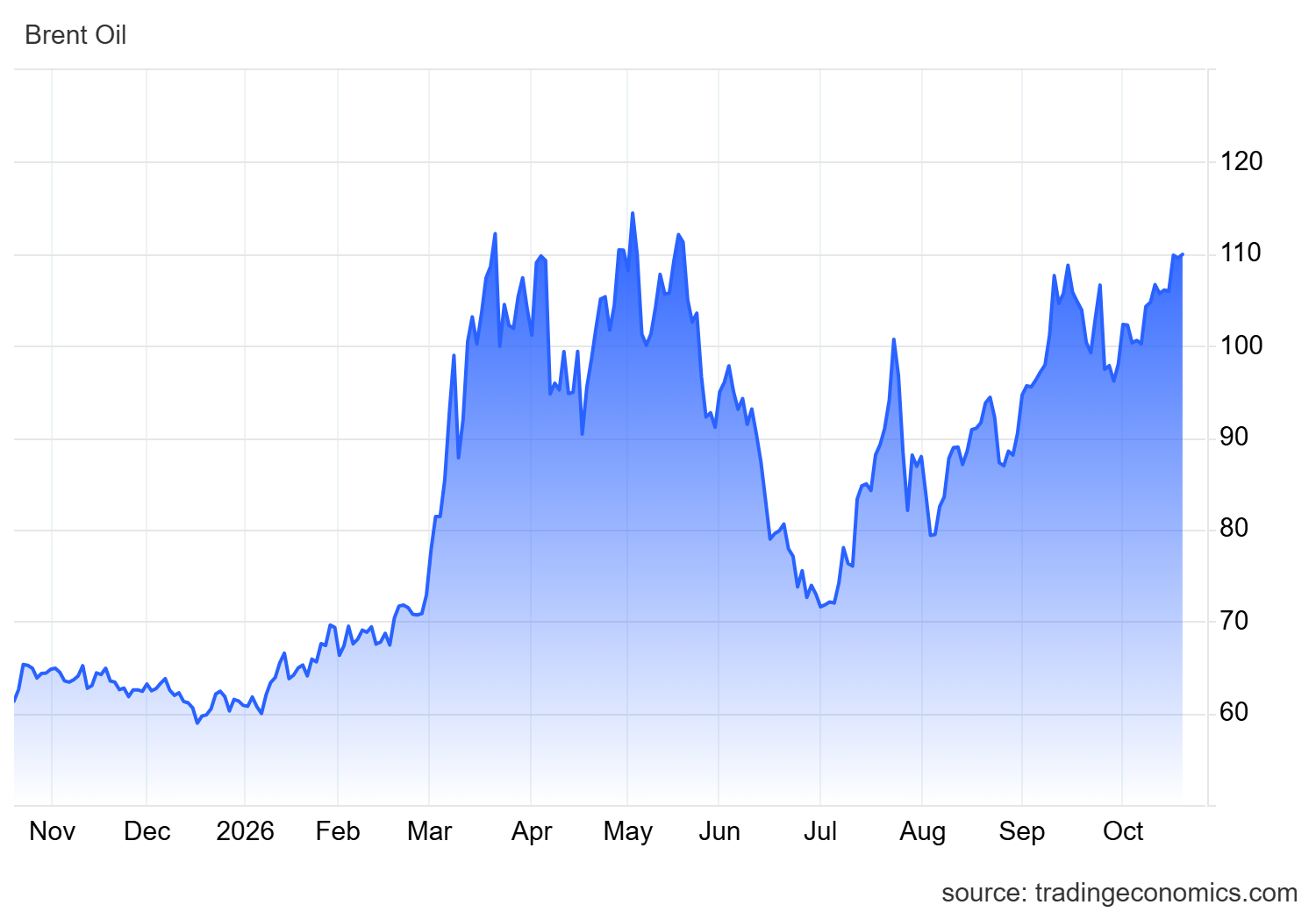
Brent is back above $110 a barrel — and this time, the Middle East is giving traders another reason to stay nervous.
Oil climbed as tensions around Iran intensified, with Israeli Prime Minister Benjamin Netanyahu stepping up pressure on Tehran. The timing matters: the market is already dealing with fragile shipping through the Gulf and lingering fears that a wider conflict could disrupt even more supply.
So naturally, the next question is already popping up:
If $110 is here, could $120 be next?
Maybe. But oil probably needs more than scary headlines to get there.
$110 Is Where Things Get Interesting
The geopolitical backdrop is clearly bullish for oil.
Any escalation involving Iran immediately brings the Strait of Hormuz into the conversation. It's one of the world's most important oil routes, so even the possibility of further disruption can add a hefty risk premium to crude.
But there is another side to the story.
The U.S. has also moved toward easing some restrictions on Russian energy flows, potentially bringing more supply back into the market. That's one reason Brent has struggled to simply run away above $110.
In other words, oil is being pulled in two directions:
More Middle East disruption? $110 may not look expensive for long.
No fresh supply shock? Traders may start taking profits.
What Could Actually Push Oil Toward $120?
This is where traders should look beyond Netanyahu's comments.
Another military headline might send Brent higher for a few hours. But a more lasting breakout would probably need something traders can actually see in the physical market — fewer barrels moving through the Gulf, worsening shipping disruptions, or
attacks affecting major energy infrastructure.
That's the difference between a geopolitical spike and a real supply-driven rally.
And it matters when oil is already trading above $110.
If Brent holds above $110 while Gulf flows deteriorate, the market could quickly start talking about $115 and even $120.
But if the headlines get louder while the barrels keep moving?
$110 could turn out to be where the excitement starts fading.
For now, don't just watch what politicians are saying.
Watch whether the oil is still moving.


