
Gold has had a rough few sessions.
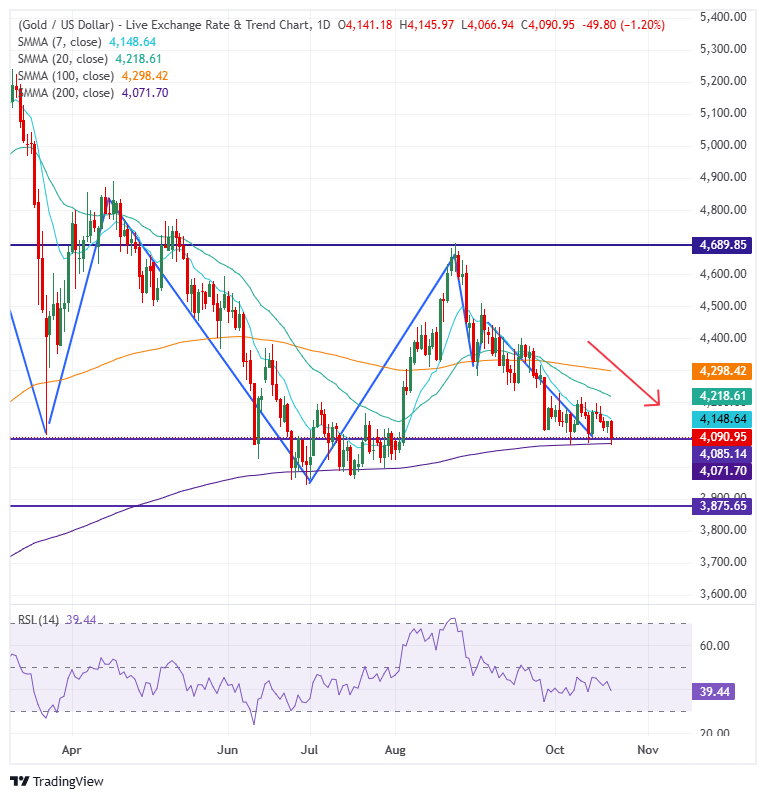
Spot gold fell to around $4,085 on Thursday, extending its decline to a fourth straight session and putting the metal at its lowest level since October 14.
The selloff has been closely tied to oil.
With Brent back around $110, concerns over higher energy prices are feeding into inflation expectations. That, in turn, is keeping the market focused on the possibility of interest rates staying higher for longer. Higher Treasury yields and a firmer dollar are not a great combination for gold.
So, can gold still bounce?
Yes — but it needs to show buyers are actually coming back.
Right now, $4,100 is the level to watch. Gold has been hovering around this area, and a break below it would put the October 14 low near $4,073 back in focus. Below that, the $4,000 level becomes much harder to ignore.
On the upside, the first hurdle is around $4,135. A move back above that level would be an early sign that sellers are losing some control. Above $4,150–$4,170, the recovery would start to look more convincing.
There is one thing gold bulls will need on their side: lower yields and a softer dollar.
If oil prices keep climbing and markets continue to price a higher-for-longer Fed, gold could remain under pressure. But if oil cools, Treasury yields ease and the dollar pulls back, gold could have room to recover.
So rather than asking whether the recent drop is the end of gold's rally, it may be more useful to watch how price behaves around $4,100.
$4,100 holds → buyers have a chance to rebuild momentum
$4,100 breaks → $4,073, then $4,000 come into focus
$4,135 reclaimed → first sign of a recovery
$4,150–$4,170 cleared → the rebound starts looking more credible
For now, gold is not showing a confirmed bottom. But after four straight losing sessions, $4,100 could be where the market starts to tell us whether this is a deeper correction or the beginning of a new base.