US interest rates, inflation, and economic growth are among the main forces shaping currency markets. Political events can change that outlook, particularly when an election alters expectations for government spending, taxes, or trade policy.
The US midterm elections are one such event. Held halfway through a president's four-year term, they determine the balance of power in Congress and can affect how much of the president's policy agenda becomes law.
For forex traders, however, the relationship between election results and currency prices is rarely straightforward. A Republican victory does not automatically strengthen the dollar, just as a Democratic victory does not necessarily weaken it.
What matters is how the result compares with market expectations, which policies are likely to change, and how investors respond.
This guide explains how US midterm elections influence forex markets, why major currency pairs may react differently, and how beginners can manage the risks of trading around election results.
What Are US Midterm Elections, and Why Do They Matter?
US midterm elections take place every two years, midway through a presidential term. Voters elect all 435 members of the House of Representatives and approximately one-third of the Senate.
The president remains in office, but control of Congress would change.
That matters because Congress plays a central role in approving federal spending, taxes and legislation. A president whose party controls both chambers generally has more room to pursue a legislative agenda. When control is divided, major policy changes often require negotiations between the two parties.
For currency markets, the implications extend beyond politics.
Changes in expected government spending or taxation can influence economic growth, inflation, and the supply of US government debt. Those expectations may affect Treasury yields, Federal Reserve policy forecasts and ultimately the value of the dollar.
The market response, however, depends on the economic environment.
A proposed spending increase might support the dollar if investors expect stronger growth and higher interest rates. The same proposal could weigh on the currency if it raises concerns about government borrowing or fiscal sustainability.
Election results influence currencies through expectations about future policy, not through party control alone.
How Do Election Results Affect the US Dollar?
The link between politics and exchange rates becomes easier to understand when broken into several stages.
Fiscal Policy Expectations
Fiscal policy refers to how the government raises and spends money.
If investors expect a new Congress to support additional spending or tax cuts, they may anticipate stronger economic demand. Depending on the circumstances, that could also increase inflation expectations or government borrowing.
If the election makes major fiscal changes less likely, investors may revise those expectations downward.
But the effect is not automatic. Existing spending commitments, economic conditions, and the policies under discussion all influence the outcome.
Treasury Yields and Interest Rates
US Treasury yields are important to currency markets because they influence the returns investors can earn on dollar-denominated assets.
When US yields rise relative to those in other countries, the dollar may become more attractive to international investors.
For example, if investors expect stronger US growth and fewer Federal Reserve rate cuts, Treasury yields may increase. That can support the dollar against currencies whose central banks are expected to keep interest rates lower.
The reverse can happen when US yields fall.
Still, higher yields do not always mean a stronger dollar. Investors also consider inflation, government borrowing, and the reasons yields are moving.
Global Risk Sentiment
Elections can also affect how willing investors are to take risks.
If the result reduces uncertainty, investors may become more comfortable holding equities and currencies associated with global growth, such as the Australian and New Zealand dollars.
Unexpected political conflict or concerns about fiscal policy can have the opposite effect.
During periods of market stress, demand may increase for currencies traditionally regarded as safe havens, including the US dollar, Japanese yen, and Swiss franc.
Which currency benefits most depends on the source of uncertainty and the broader economic environment.
Why Market Expectations Matter More?
Forex markets are forward-looking. Investors do not wait until election night to consider the possible result. They follow polling, economic forecasts, and political developments for weeks or months, adjusting their positions as expectations change.
This process is often described as pricing in an event. Suppose investors widely expect the opposition party to win the House of Representatives.
If that result occurs, the market may react only modestly because traders have already prepared for it.
But if the president's party unexpectedly retains control, investors may need to reconsider their assumptions about future legislation and government spending.
That change in expectations can produce a larger currency move than the result itself might suggest.
Even a widely expected outcome can move markets if the margin of victory, Senate result, or policy implications differ from forecasts.
This explains why election headlines alone are a poor guide to trading direction.
A useful question is not simply, “Who won?”
It is: “What did the market expect, and what has changed?”
Three Election Scenarios and Their Possible Forex Impact
There is no single dollar response to a US midterm election. Still, three broad scenarios can help traders organise their analysis.
Scenario 1: Divided Government
A divided government occurs when the president's party does not control both chambers of Congress.
Major changes to taxes and spending may become more difficult because legislation requires support across party lines.
Investors could interpret this as reducing the likelihood of substantial new fiscal stimulus.
If that leads markets to expect less inflation pressure or lower Treasury yields, the dollar may weaken.
However, divided government can also create uncertainty over budgets, debt-ceiling negotiations and other legislative decisions.
If those disagreements unsettle financial markets, demand for safe-haven assets may increase, potentially supporting the dollar.
The outcome therefore depends on whether investors focus more on reduced fiscal expansion or increased political uncertainty.
Scenario 2: Unified Government
A unified government exists when the president's party controls the White House and both chambers of Congress.
This can make it easier to advance legislation, although party disagreements and procedural rules can still limit what passes.
Investors may reassess the prospects for tax changes, infrastructure spending, trade measures, or other policies.
If expected fiscal expansion lifts growth and interest-rate forecasts, US Treasury yields could rise and support the dollar.
But a different response is possible if markets become concerned about larger deficits or the long-term sustainability of government borrowing.
Unified government therefore creates greater scope for policy changes, not a guaranteed bullish signal for the dollar.
Scenario 3: An Unexpected Election Result
Surprises can produce the sharpest initial market reactions because investors must adjust positions built around a different outcome.
Imagine polling suggests one party will gain a comfortable majority, but the election produces a much closer result.
Traders may quickly reassess fiscal policy expectations, Treasury yields, and the dollar.
Some investors may close positions that no longer fit their outlook, adding to short-term price movements.
During these periods, forex spreads can widen, and execution prices may become less predictable.
Yet a surprise does not always produce a lasting trend.
Once the immediate adjustment is complete, attention may return to inflation, employment, and central bank policy.
The size and duration of the reaction depend on how much the election changes the economic outlook.
How Major Currency Pairs React to US Midterms?
Not every currency pair responds to US political developments in the same way.
The dollar is one side of many major forex pairs, but the other currency has its own economic and monetary-policy drivers.
EUR/USD
EUR/USD often responds to changes in the relative outlook for US and eurozone interest rates.
If an election result lowers expected US yields while European Central Bank policy expectations remain broadly unchanged, EUR/USD may rise.
If US yields increase relative to eurozone yields, the pair may face downward pressure.
However, eurozone inflation, economic growth and ECB decisions can reinforce or offset the election-related move.
For beginners, watching both US and European interest-rate expectations provides more context than following the election result alone.
USD/JPY
USD/JPY is particularly sensitive to the gap between US and Japanese interest rates.
If Treasury yields fall after an election, the dollar may weaken against the yen.
The yen can also benefit when investors become more cautious about global risk.
But these effects do not always move together. Bank of Japan policy, Japanese yields, and the possibility of currency intervention can also influence USD/JPY.
GBP/USD
GBP/USD reflects both the US and UK economic outlooks.
A sharp change in US interest-rate expectations can move the pair even when there is no significant news from Britain.
At the same time, UK inflation, economic growth and Bank of England policy may influence the pound independently.
Traders should therefore avoid assuming that every GBP/USD movement during election week is caused by US politics.
AUD/USD and NZD/USD
The Australian and New Zealand dollars are often sensitive to changes in global growth expectations and investor risk appetite.
If an election result reduces uncertainty and supports confidence in the global economy, these currencies may benefit.
Concerns about US trade restrictions or weaker international demand could have the opposite effect.
China's economic outlook, commodity prices, and domestic central bank policies also matter.
USD/CHF
Both the US dollar and Swiss franc can attract demand during periods of uncertainty.
As a result, USD/CHF does not have a reliable one-way response to political risk.
The pair's direction depends on which currency attracts stronger demand, alongside changes in US and Swiss interest-rate expectations.
For beginners, this is a useful reminder that a currency pair measures the relative strength of two currencies, not the strength of one in isolation.
A Historical Example: The 2022 US Midterm Elections
The 2022 midterm elections provide a useful example of how political developments and economic data can compete for market attention.
Before the vote, investors considered the possibility of a strong Republican performance that could shift control of Congress.
As results emerged on November 9, the expected Republican gains appeared more limited than some forecasts had suggested.
The dollar strengthened against several major currencies during that period as investors reassessed the election outcome.
But the following day, November 10, a different event took centre stage.
US consumer inflation data came in below market expectations, prompting investors to reduce forecasts for future Federal Reserve interest-rate increases.
Treasury yields fell sharply, and the dollar weakened.
The contrast is instructive.
The election influenced expectations about future policy, but the inflation report had a more immediate effect on the anticipated path of US interest rates.
For forex traders, the episode illustrates why political developments should be assessed alongside the economic calendar.
An election may attract most of the headlines, yet the next inflation report or central bank decision can have a greater impact on currency prices.
How Beginners Can Manage Forex Risk During Election Week?
Election periods can be difficult to trade because prices may move quickly as results arrive and investors adjust their positions.
For beginners, the priority should be understanding how those conditions affect execution and potential losses.
Check the Economic Calendar
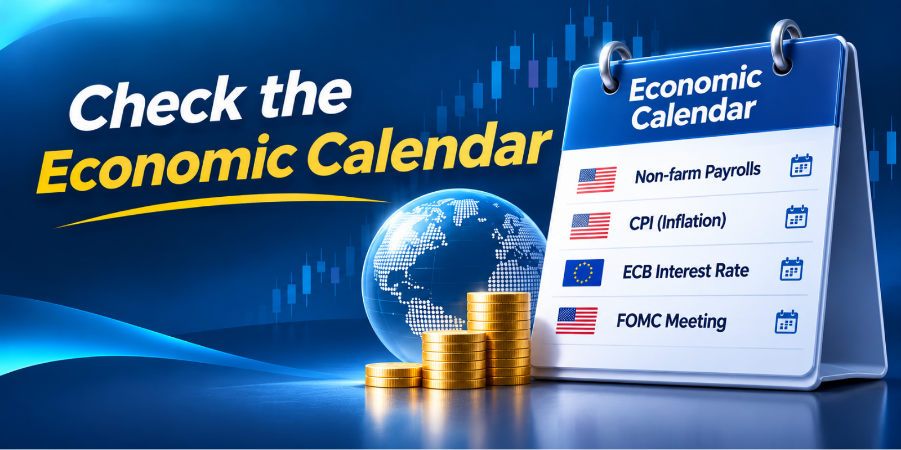
Election results do not arrive in isolation. US inflation releases, employment reports, and Federal Reserve announcements may occur within the same trading week. Before opening a position, check which events are scheduled and whether they could change the interest-rate outlook. A trade based on election expectations can be disrupted by unrelated economic news.
Calculate Position Size Before Trading
Wider price swings can make a position riskier if the trader keeps the same lot size. Suppose you have a $1,000 trading account and want to limit the planned loss on a EUR/USD trade to $10, or 1% of the balance. Under a standard EUR/USD contract, one lot is worth approximately $10 per pip.
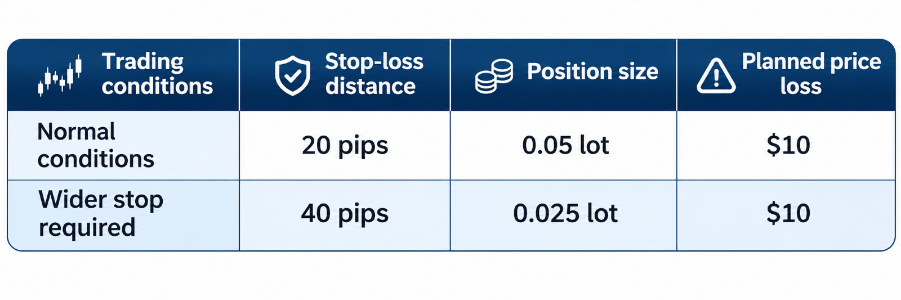
These figures exclude spreads, commissions, and slippage.
If market conditions justify a wider stop-loss, reducing position size can keep the planned risk at the same level.
The stop should be based on the trade setup, not widened simply to avoid being stopped out.
If the broker does not support the calculated position size, skipping the trade may be more appropriate than exceeding the risk limit.
Watch Spreads and Slippage
During unexpected election developments, liquidity can become uneven.
A broker that normally quotes a narrow EUR/USD spread may temporarily widen it as market participants become less willing to trade at existing prices.
For example, if the spread rises from 1 pip to 4 pips, the spread cost on a 0.1-lot EUR/USD position increases from approximately $1 to $4.
Slippage presents another risk.
A stop-loss set at a particular price may execute at a less favourable level if the market moves too quickly or gaps through the order.
This means the actual loss can exceed the amount calculated from the planned stop distance.
Before trading around major events, check the broker's order-execution rules and observe how spreads behave under volatile conditions.
Avoid Treating Election Results as Trading Signals
A divided Congress does not automatically mean selling the dollar. A unified government does not automatically mean buying it.
Before considering a trade, ask whether the outcome was expected, whether Treasury yields confirm the initial reaction, and whether other economic developments could change the outlook.
If the market has already moved sharply before you can assess those factors, there is no need to chase the price.
Missing a trade is different from taking a loss on a poorly understood position.
Know When the Election Story Has Lost Its Influence
The initial market reaction may fade quickly if the result brings few surprises. In other cases, changes in fiscal or trade policy expectations can influence currencies for longer. There is no fixed three-day limit for election-related market moves. Instead, monitor whether the factors behind the original reaction are still changing. If Treasury yields, interest-rate expectations or risk sentiment have returned to their previous levels, the election may no longer be the main driver of the currency pair.
The Bottom Line
US midterm elections can influence forex markets by changing expectations for fiscal policy, economic growth, and interest rates. But the direction of the dollar is not determined by which party wins Congress. Markets respond to the difference between expected and actual results, the policies investors believe will follow, and the broader economic conditions at the time. For beginners, this distinction is essential. Rather than treating election outcomes as automatic buy or sell signals, focus on how Treasury yields, interest-rate expectations and major currency pairs respond. Election-related volatility can create trading opportunities, but it can also increase spreads, slippage, and the risk of sudden reversals. Understanding those risks is more valuable than trying to predict every election-night price movement.
FAQs
Do US midterm elections significantly affect forex markets?
They can, particularly when the results differ from market expectations or change the outlook for fiscal and trade policy. However, the impact varies between elections. Inflation, employment data, and central bank decisions may have a greater influence on currency prices.
Which forex pairs are most affected by US midterm elections?
Major dollar pairs such as EUR/USD and USD/JPY may respond to changes in US Treasury yields and interest-rate expectations. AUD/USD and NZD/USD can also react to shifts in global risk sentiment. There is no single currency pair that is always the most affected.
Does a Republican victory strengthen the US dollar?
Not necessarily. The dollar's reaction depends on the policies investors expect, the existing balance of power in Washington, and how the result compares with forecasts. A Republican victory can support or weaken the dollar under different economic conditions.
How long does election-related forex volatility last?
There is no fixed duration. The initial reaction may fade within hours or days, while a substantial change in policy expectations can influence exchange rates for longer. Traders should follow the underlying economic drivers rather than assume the effect ends after a set number of sessions.
Disclaimer
This article is for educational purposes only and does not constitute financial or investment advice. Forex and CFD trading involve substantial risk, particularly when leverage is used. Stop-loss orders do not guarantee execution at the selected price, and losses may exceed the amount originally planned. Past market reactions do not guarantee future results.