WTI crude has climbed 1% to $96.34 a barrel, while Brent is up 1.2% at $104.81. The rebound comes after both benchmarks lost more than 7% on Monday.
The sudden shift in sentiment reflects renewed Middle East tensions. Reports that the US struck Iran's Qeshm Island have brought supply concerns back into focus, particularly around the Strait of Hormuz, a key route for global oil shipments.
But the bigger question is whether this is the start of another rally or simply a bounce after Monday's sharp selloff.
Middle East Risk Is Back in Focus
Oil prices dropped sharply on Monday after diplomatic talks between Iran and Qatar raised hopes of progress towards ending the conflict. Traders quickly reduced the geopolitical risk premium that had pushed prices higher in October.
Tuesday's reports of US military action have reversed some of that optimism. However, no major new disruption to oil infrastructure or supply flows has been confirmed.
Goldman Sachs has raised its December Brent forecast to $105 a barrel, from $90 previously, and its WTI forecast to $94 from $81. The bank also warned that Brent could reach $140 in 2027 if Gulf oil production remains significantly disrupted.
Key Oil Price Levels to Watch
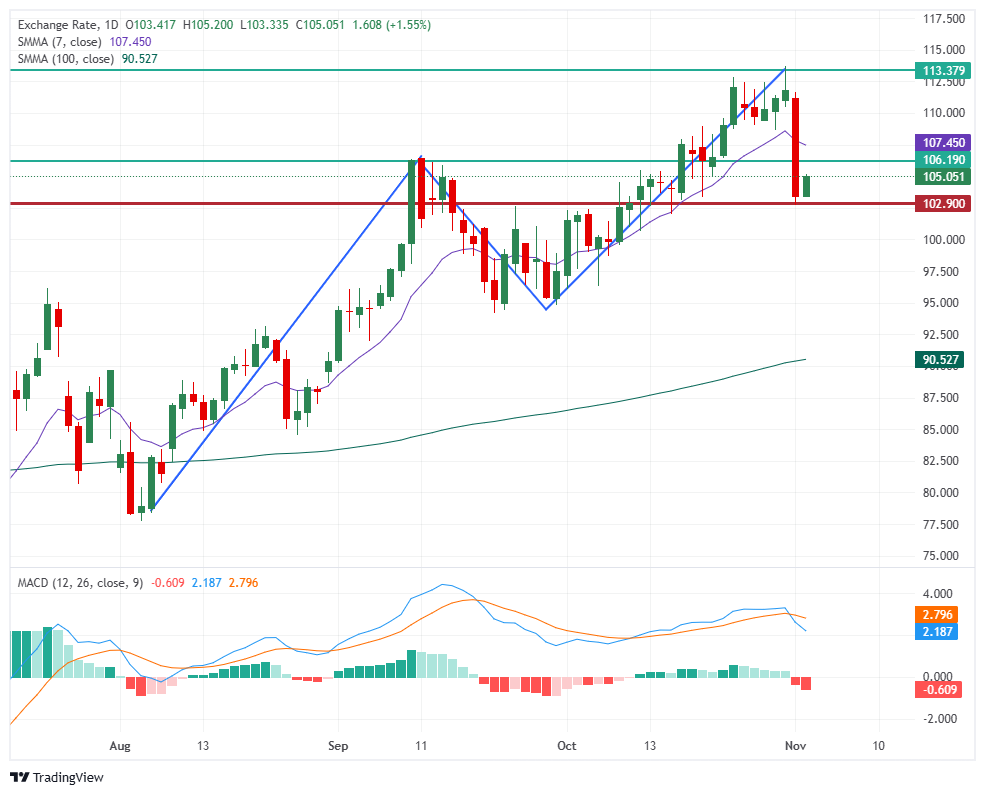
Benchmark | Key resistance | Key support |
|---|---|---|
WTI | $97.04 / $98.67 | $94.98 / $93.03 |
Brent | $106.19 / $107.57 | $102.90 / $102.08 |
WTI is approaching its first resistance near $97.04. A break above this level could open the way towards $98.67. If it fails to hold its rebound, $94.98 is the first support to watch.
Brent remains below its intraday pivot at $106.19. A move above this level could improve the short-term outlook, while a rejection may bring prices back towards $102.90.
For now, oil remains highly sensitive to headlines from the Middle East. Whether the latest rebound can continue will depend on whether geopolitical tensions lead to actual supply disruptions, rather than just renewed market concerns.