Hawkish Fed signals are lifting the greenback, but a new force is emerging beneath the rally: the global AI boom.
The US dollar is approaching a 19-month high, and expectations of further Federal Reserve rate hikes are giving investors another reason to favour the greenback. But monetary policy is only part of the story. A growing wave of global investment in US technology companies may be providing the dollar with a powerful new source of support.
A Divided Fed, but One Direction
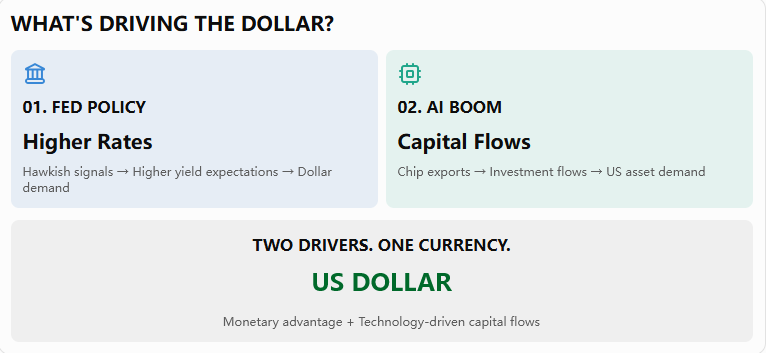
Federal Reserve officials are sending different signals about how aggressively interest rates should rise.
On November 17, New York Fed President John Williams said further tightening would likely be necessary to bring inflation under control. However, he argued that the current economic environment did not justify dramatic policy action.
St. Louis Fed President Alberto Musalem took a more hawkish position, suggesting the US economy could require several additional rate increases before spring 2027.
The difference matters. Williams favours a gradual approach, while Musalem sees a stronger case for faster tightening. Although Musalem's view does not represent an official FOMC decision, it reinforces concerns that US borrowing costs could remain elevated for longer.
The dollar has benefited from these expectations. On Tuesday, the DXY touched 103.69, its highest level in approximately 19 months, before easing slightly.
The Rise of the "Chip Dollar"
There is another reason investors are paying attention to the greenback.
In a November 16 report, Deutsche Bank strategist Mallika Sachdeva highlighted a remarkable shift: global semiconductor trade exceeded combined oil and gas trade for the first time in the four quarters through Q2 2026.
The bank calls this emerging trend the "chip dollar".
The idea is straightforward. Asian economies, including South Korea, Taiwan and Japan, generate substantial revenues from semiconductor exports. Increasingly, some of that capital is flowing back into US technology stocks and other American assets.
This creates another source of demand for the dollar, beyond traditional interest-rate advantages.
In other words, the AI boom is not just supporting technology stocks. It may also be strengthening the currency of the country at the centre of the global AI investment cycle.
Can the Rally Last?
The dollar now has two important sources of support: expectations of tighter monetary policy and continued international investment in US technology.
But neither is guaranteed to last.
If inflation remains stubborn, the Fed could maintain its hawkish stance, supporting the dollar further. However, if AI investment loses momentum or foreign demand for US equities weakens, one of the greenback's newer sources of support could fade.
The dollar's strength reflects more than just interest rates. The bigger question is whether America's monetary advantage and its dominance in the AI economy can continue working in the same direction.