
US economic data still look healthy. Jobs remain resilient and economic growth is holding up. But financial markets are telling a different story.
Stocks are pulling back, commodities are selling off, credit risks are rising and investors are moving towards the US dollar. These moves suggest that markets may be preparing for a slowdown, even before official economic data show clear signs of trouble.

So, what is really happening?
1. Bonds Are Sending an Early Warning
One signal is coming from the US Treasury market.
The gap between 2-year and 10-year Treasury yields has narrowed sharply, from 74 basis points in early February to just 27 basis points.
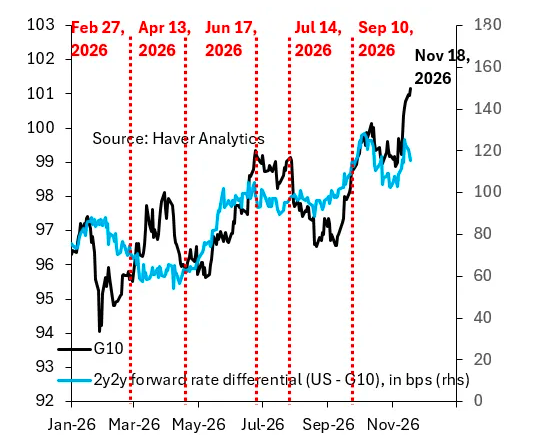
A flatter yield curve often reflects weaker confidence in future economic growth. Investors may be expecting tighter financial conditions and slower business activity ahead.
The concern is that the Federal Reserve could face a difficult choice: keep interest rates high to fight inflation, or risk putting even more pressure on an already slowing economy.
2. Commodities Are Losing Their Appeal
The weakness is spreading across commodity markets.
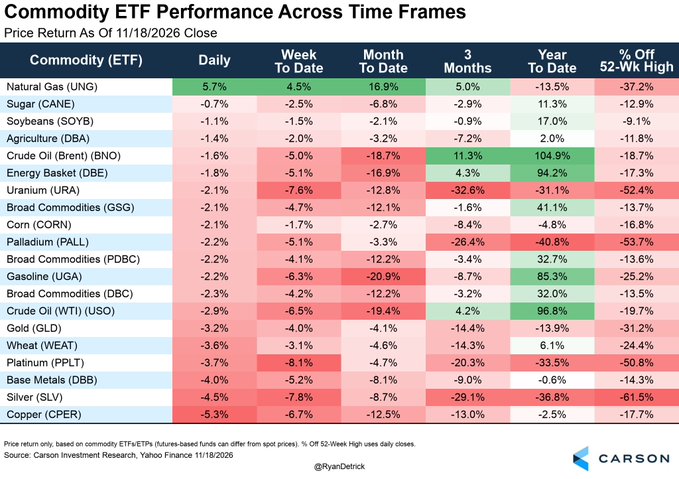
Since the beginning of November, the S&P GSCI commodity index has fallen more than 12%, according to Dow Jones Market Data.
Copper and oil have both come under pressure, while investors have reduced exposure to riskier assets.
This matters because commodities are closely linked to real-world demand. When businesses expect weaker economic activity, demand expectations for industrial metals and energy can deteriorate.
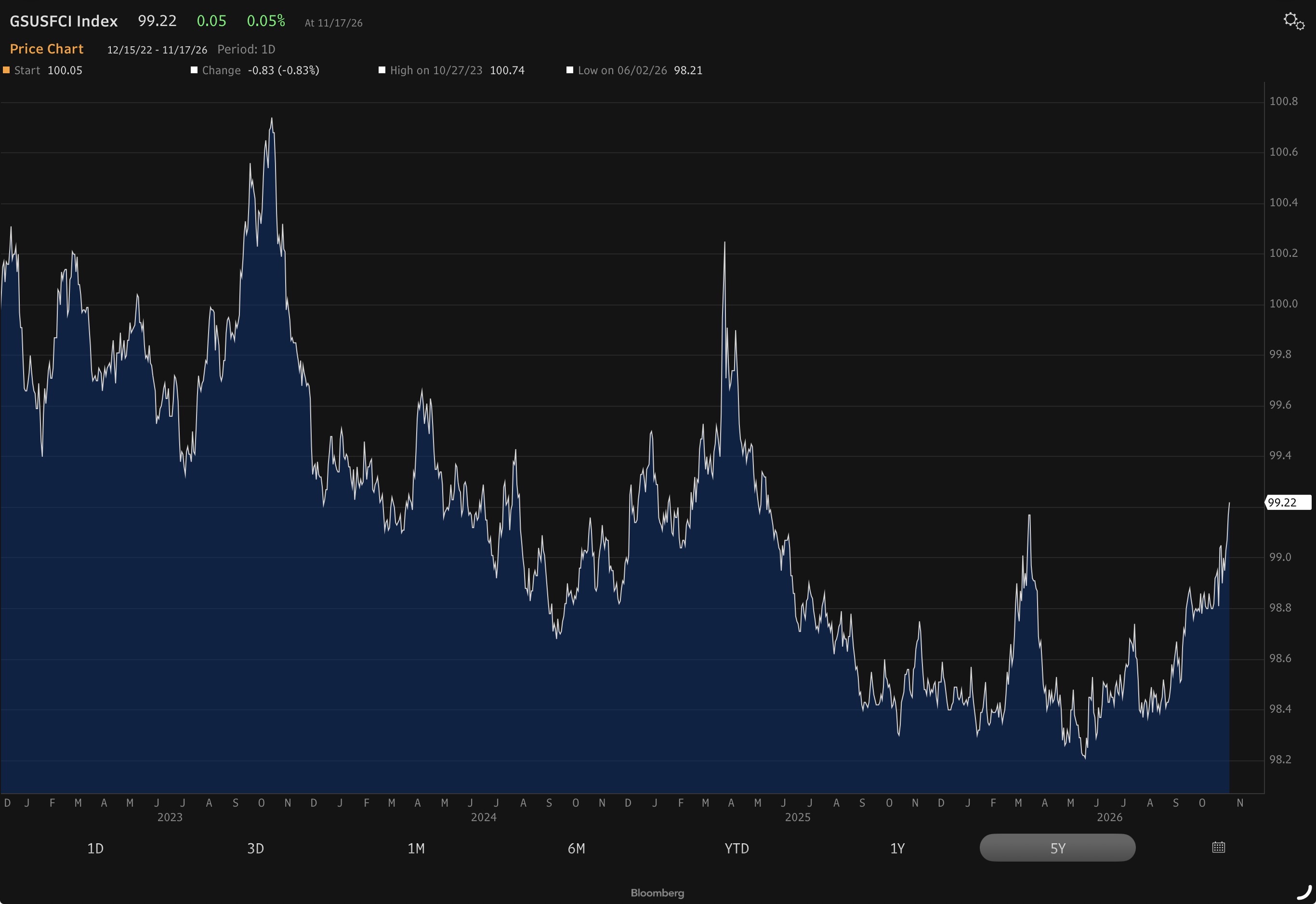
The sell-off may therefore be more than a temporary market correction. It could reflect growing concerns about future demand.
3. The Dollar Is Benefiting From the Uncertainty
As investors become more cautious, the US dollar has strengthened, recently reaching its highest level in more than a year.
Interestingly, longer-term Treasury yields have moved lower at the same time.
This suggests that investors may be seeking safety in government bonds even as expectations for further Fed rate hikes remain elevated.
For gold, this combination creates another challenge: a stronger dollar can make gold more expensive for international buyers, while concerns about interest rates continue to influence demand.
What Does This Mean for Traders?
The key question is whether markets are simply correcting or beginning to price in a broader economic slowdown.
For now, three developments deserve attention:
- Gold: A stronger dollar could limit recovery attempts.
- Oil and copper: Further weakness may signal deteriorating demand expectations.
- US indices: Rising credit risks and tighter financial conditions could put pressure on stock valuations.
The Bottom Line
A recession is not guaranteed. Strong economic data still provide some support for the US economy.
But markets often move before economic statistics catch up.
The biggest risk may not be what the latest data show, but what investors are already preparing for: an economy entering a slower and more difficult phase.