
WTI crude is back on the offensive.
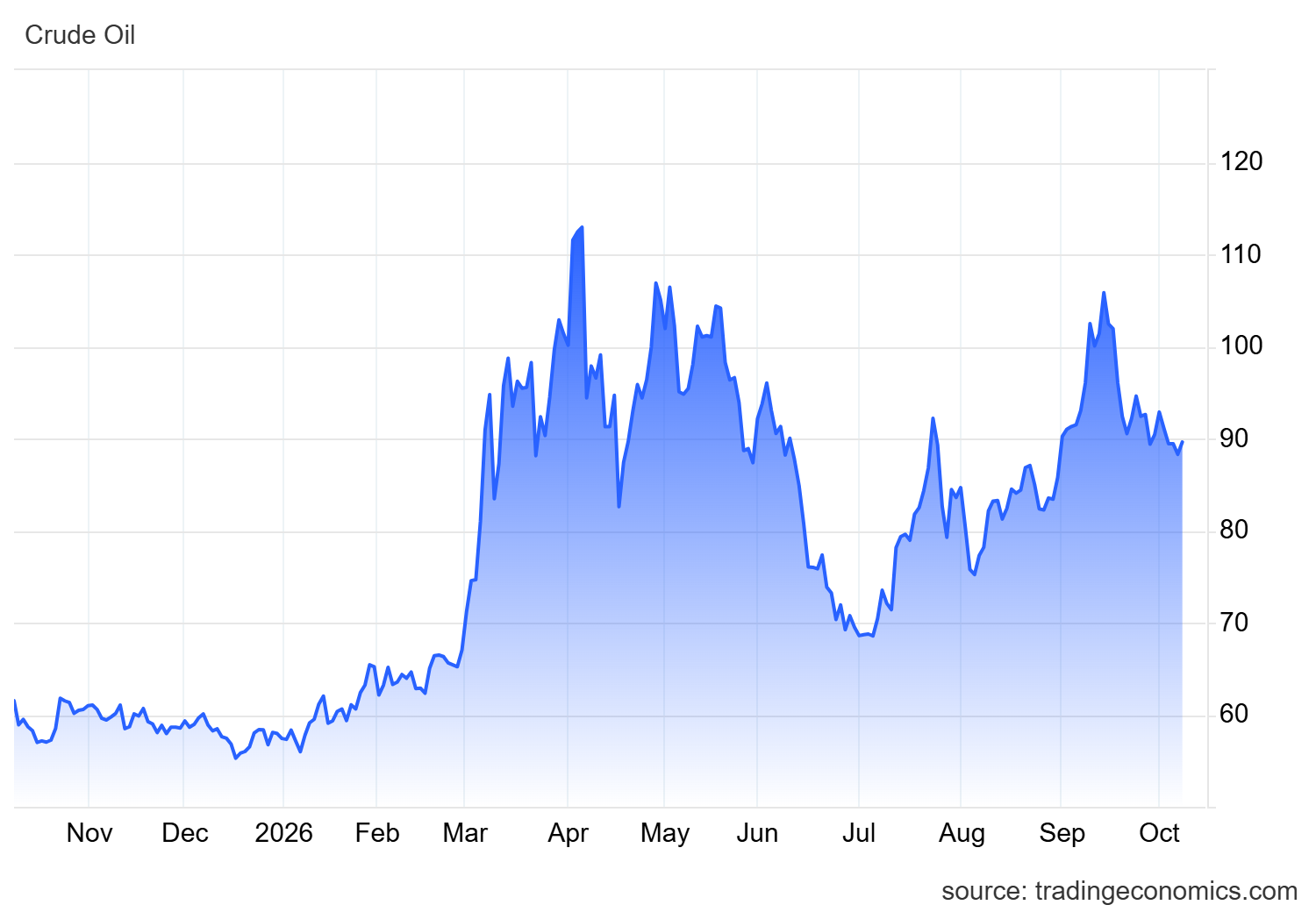
U.S. crude has broken above $89 a barrel, rising around 0.8% on the day, as renewed Middle East supply concerns combine with tighter U.S. inventories. U.S. crude stocks fell by 3.2 million barrels last week, defying expectations for an increase.
The bigger driver, however, is supply risk.
Fresh attacks around key Middle Eastern shipping routes are raising concerns over potential disruptions, keeping a risk premium in crude prices. Brent has already moved back above $100, while WTI is testing levels not seen since earlier in the year.
Is $90 the Next Test?
Technically, $90 is now the obvious near-term hurdle.
A sustained break above $90 could open the door toward $92–95, especially if supply disruptions intensify or U.S. inventories continue to decline.
But there is also a reason not to chase the move blindly.
The latest Reuters analyst survey puts the average 2026 WTI forecast at $83.90, meaning prices are already trading above the consensus full-year estimate.
For USOIL, the setup is relatively straightforward:
Above $90 → $92–95 comes into focus.
Failure to hold $89 → the recent breakout could lose momentum.
For now, the key question is whether $90 becomes a new floor — or another ceiling for WTI.