.jpg)
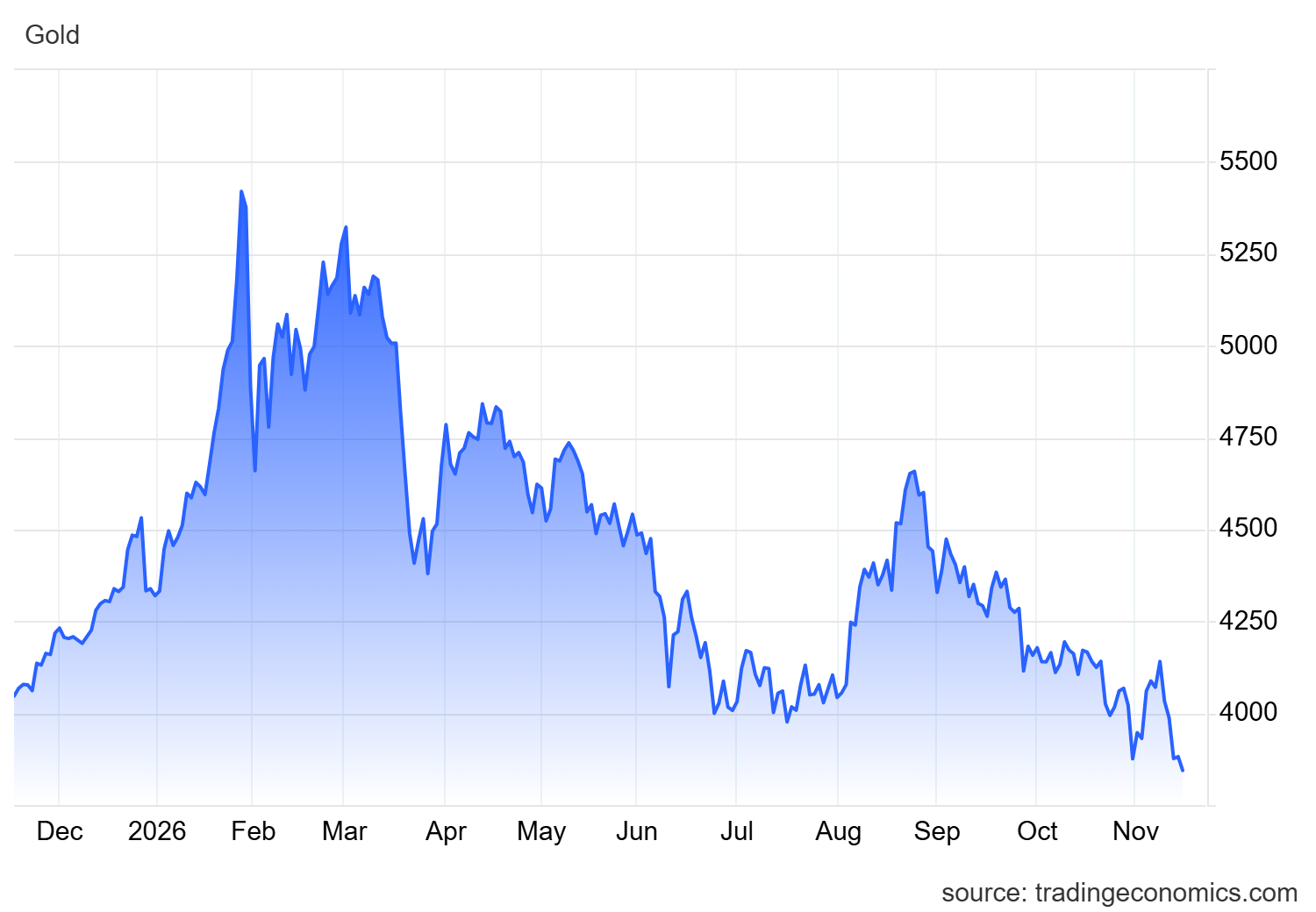
Gold has continued to lose ground, falling to $3,838.68, down 1.11% in the latest session. The decline raises an important question: if inflation concerns and rising government debt are supposed to support gold, why is the metal struggling to attract buyers?
The answer may lie in how markets are interpreting inflation.
Higher inflation does not automatically mean higher gold prices. What matters is how central banks respond. If persistent price pressures force the Federal Reserve to keep interest rates higher for longer, the resulting rise in Treasury yields can make holding gold less attractive.
Unlike bonds, gold pays no interest. When investors can earn more from interest-bearing assets, the opportunity cost of holding gold increases. A stronger US dollar adds further pressure by making dollar-priced gold more expensive for overseas buyers.
The Inflation Paradox
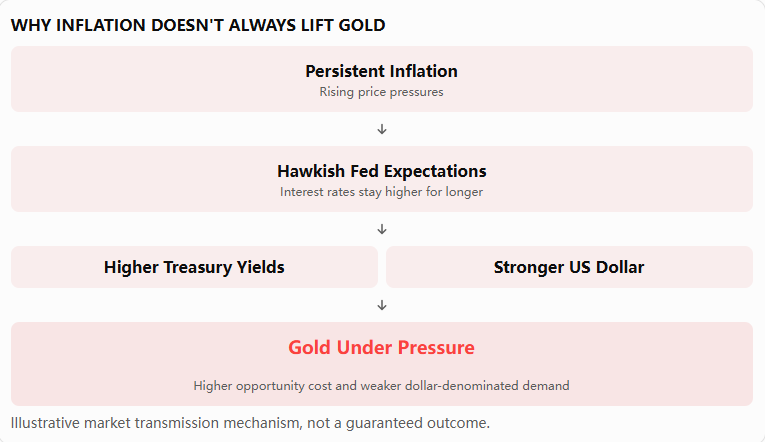
This creates a difficult situation for gold. Inflation may strengthen its appeal as a store of value, but the monetary policy response to inflation can work in the opposite direction.
The distinction is particularly important when price pressures come from supply disruptions, such as higher energy costs. The Fed cannot directly solve supply shortages through interest rates. It can, however, restrict overall demand to prevent higher prices from spreading across the economy.
That means inflation could remain uncomfortable even as tighter financial conditions weigh on economic activity. Gold may struggle during this period because markets are focused less on inflation itself and more on how long monetary policy will remain restrictive.
Why the Long-Term Bullish Case Has Not Disappeared
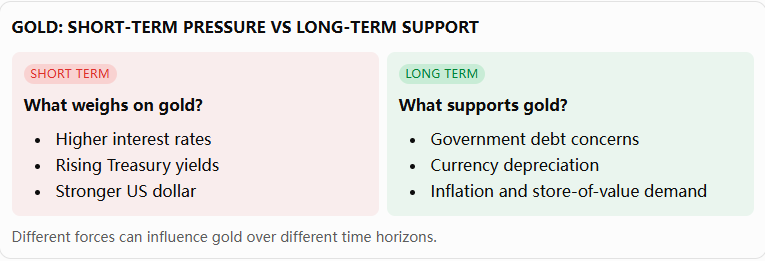
The recent decline does not necessarily undermine gold's longer-term investment case. Concerns over government debt, currency depreciation and the purchasing power of money continue to support the argument for holding gold.
UBS, for example, still expects prices to reach $5,000 per ounce in Q4 2027, although it has lowered its near-term forecast to $4,500.
But long-term demand does not guarantee a short-term price recovery. Before gold can benefit fully from concerns over currency debasement, the pressure from higher yields and a stronger dollar may need to ease.
What Could Change the Direction?
The next move in gold will depend heavily on whether US monetary conditions begin to loosen.
If inflation remains persistent and the Fed maintains a hawkish stance, elevated yields could keep limiting gold's upside. But if economic data weakens enough to revive expectations of rate cuts, Treasury yields and the dollar could come under pressure, giving gold more room to recover.
For XAUUSD traders, the important signal is not simply whether inflation is rising or falling. It is whether inflation is forcing the Fed to maintain restrictive policy, or whether slowing economic activity is beginning to shift the balance towards lower rates.