
France’s 10-year government bond yield touched 5% on Wednesday, its highest level in 24 years, as concerns over the country’s finances continued to build.
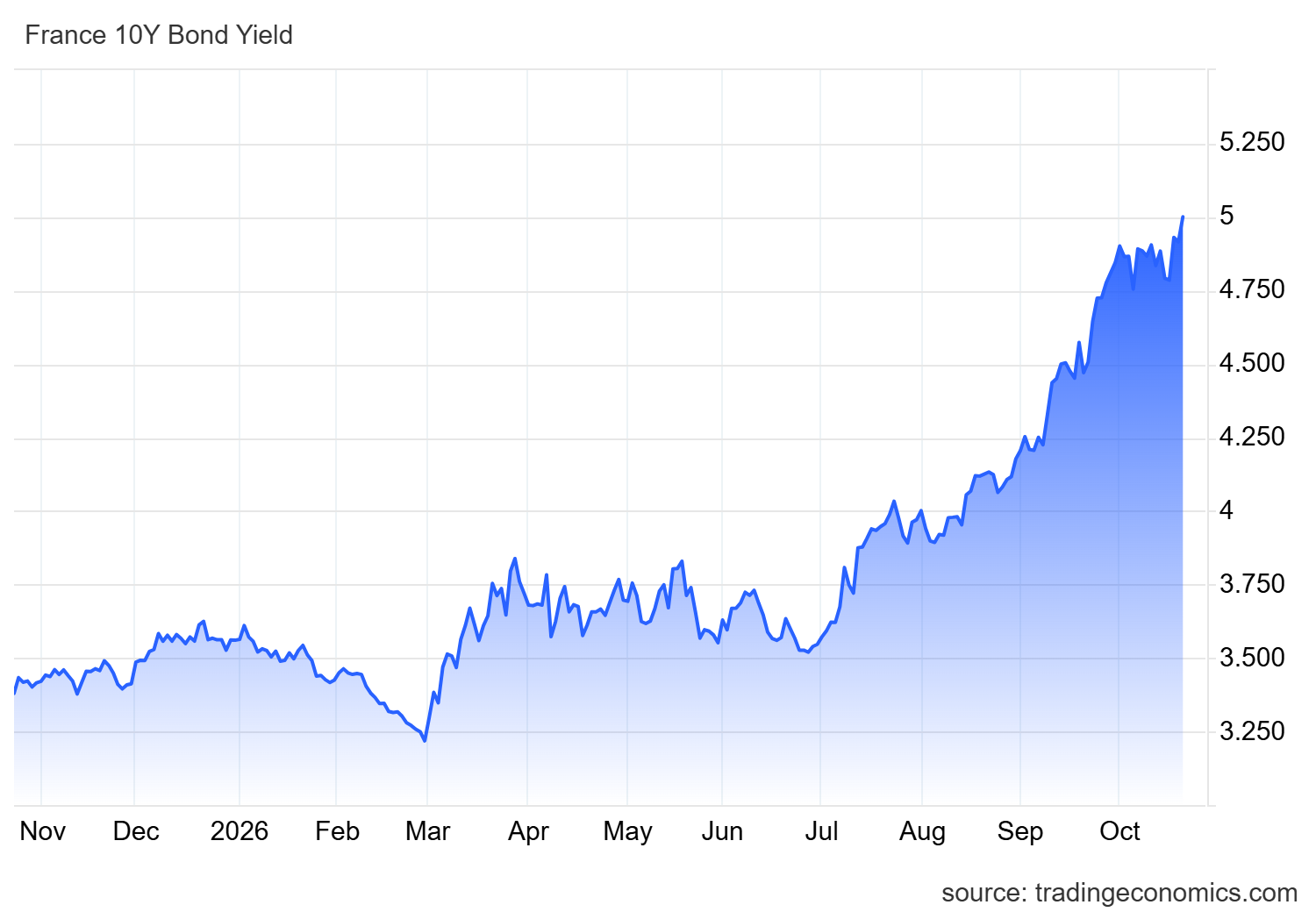
The gap between French and German 10-year yields also widened to around 157 basis points, close to levels last seen in 2011. The wider the gap becomes, the more investors are demanding to hold French debt over safer German bonds.
For the euro, this is not necessarily good news.
Higher yields can support a currency when they reflect stronger growth or expectations for higher interest rates. In France’s case, however, borrowing costs are rising as investors worry about the budget, high deficits and political uncertainty.
Stronger economy → higher yields → potentially positive for the currency
Rising fiscal risk → higher yields → potentially negative for the currency
That distinction matters for EUR/USD.
If French yields continue to rise and the spread with German bonds widens further, the euro could face more pressure as investors become more cautious about euro-area assets.
On the other hand, progress on France’s budget or an easing in bond-market stress could take some pressure off the euro.
For EUR/USD, France is now another factor to watch alongside Fed and ECB rate expectations.
What to watch → French 10-year yields · France-Germany yield spread · France’s budget